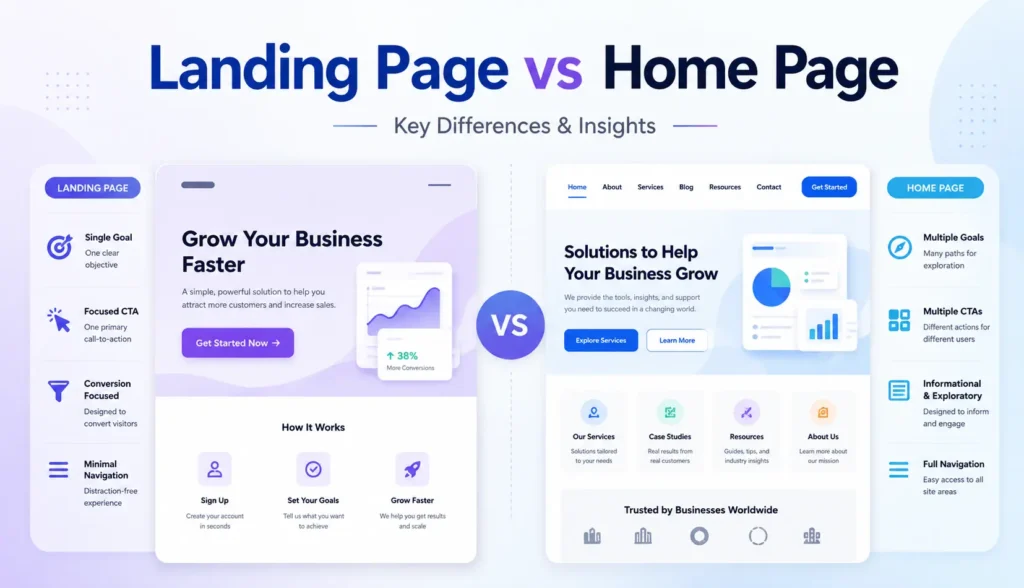
While constructing a website or implementing a marketing strategy, it is important to know the distinctions between a landing page vs home page. In reality, a lot of people often confuse these two terms and tend to treat them as being similar, which is not the case.
In this article, we will examine the main differences between a landing page vs home page, their goals, advantages, and how to use them effectively.
What is the difference between a Home Page, Landing Page and a Website?
Simply put, a website contains many pages. A homepage is one specific page within it. A landing page can be part of a website or completely standalone.
Before we discuss this in detail, here is a simple overview of what landing pages, home pages and websites are.
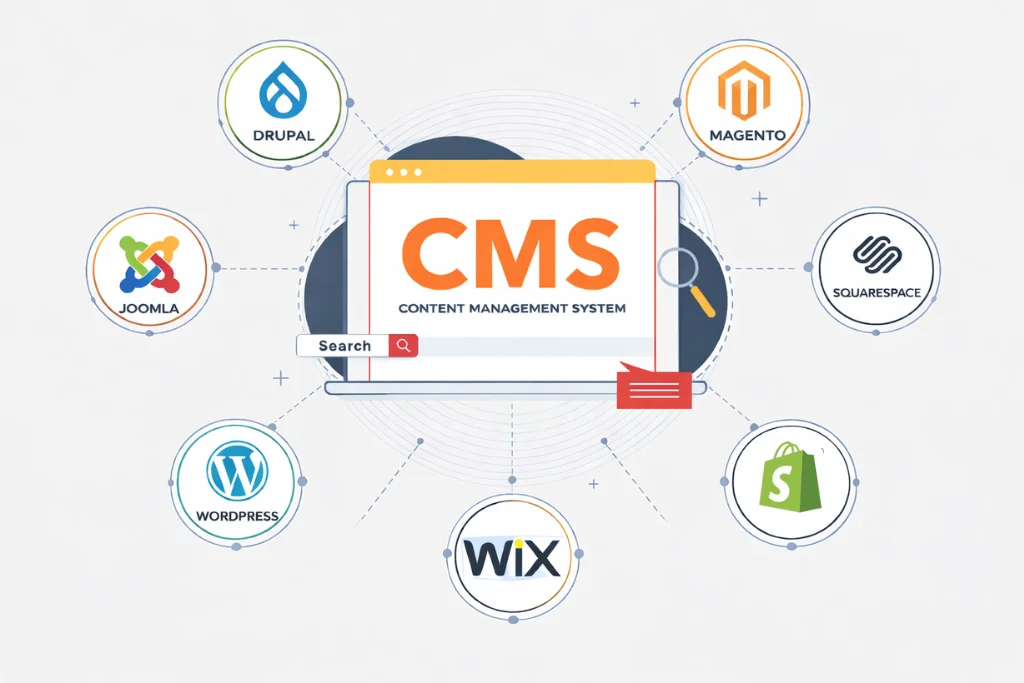
Website is the broadest term for a collection of pages under one domain (e.g. yourstore.com) covering everything: about, services, blog, contact, shop, etc. It’s built for exploration and serves many audiences with different needs.
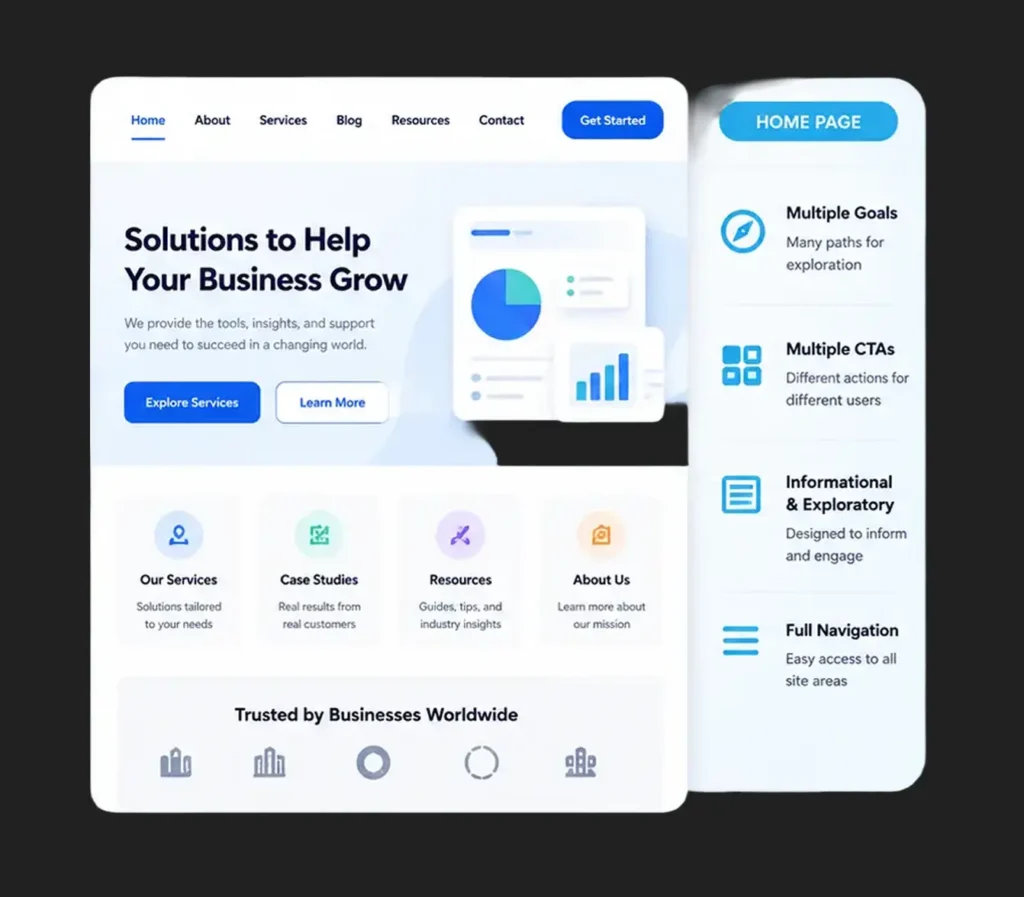
Homepage is the front door of a website. This is the first page most visitors land on when they type your domain. It gives an overview of who you are and directs visitors deeper into the site. It has to serve multiple types of visitors at once, so it’s generally broad in message.
Landing page is a standalone, focused page built for one specific goal usually tied to an ad, email campaign, or link. It has a single audience, a single message, and a single call to action (book a call, sign up, buy now).
Now that you have a brief overview of landing pages, websites and home pages, let’s understand each of these in detail.
What Is a Home Page?
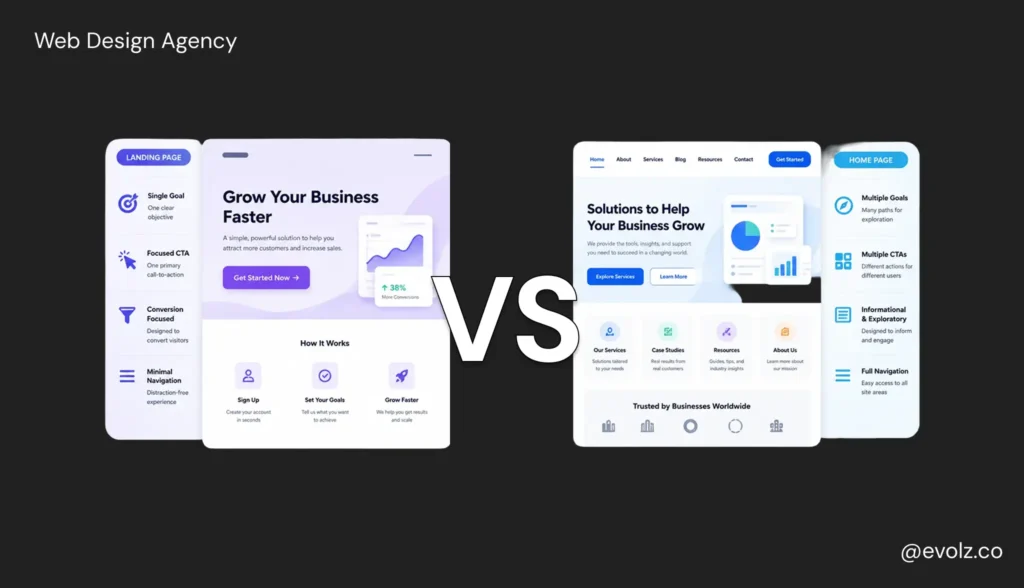
A home page is the main entry point of a website. It serves as a central hub where visitors can learn about your business, explore services, read company information, and navigate to different sections of your website.
Key Characteristics of a Home Page
- Acts as a gateway to your website
- Includes various ways to navigate the website
- Includes details about products or services provided by you
- Takes a general approach
- Encourages users to check out other pages as well
Purpose of a Home Page
The main purpose of a home page is to provide information to users about yourself. It enables people to know what you are all about, the kind of services you offer, and the places where they should look for information.
What Is a Landing Page?
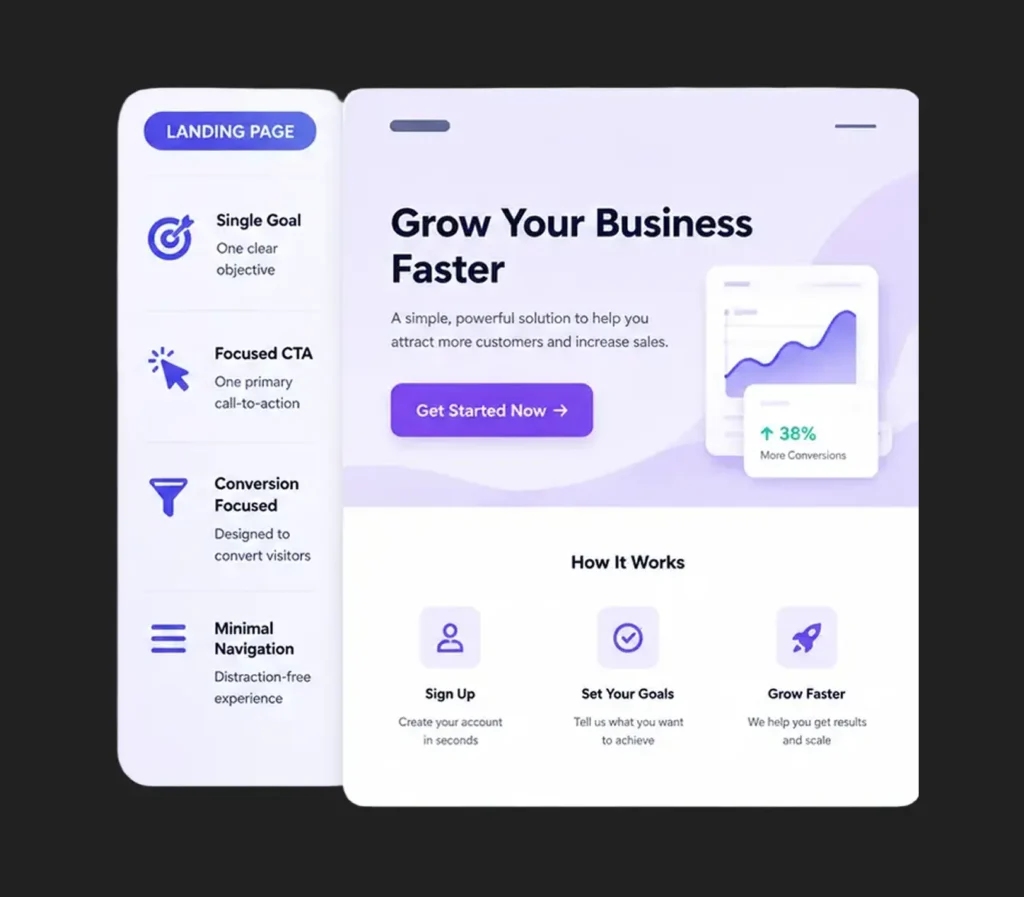
A landing page is a unique web page created solely with the aim of attaining a particular marketing goal. The visitor lands on a landing page when they click through from either an ad, email marketing campaign, social media site, or any other promotion.
Contrary to a homepage, a landing page is geared towards one action, which could be:
- Subscribe to a newsletter
- Download an eBook
- Register for a webinar
- Get a quotation
- Buy something
- Features of a Landing Page
- A defined goal
- Little or no navigation buttons
- Effective call-to-action
- Conversion-oriented
- Targeted to a specific group or campaign
Purpose of a Landing Page
The primary purpose of a landing page is to convert visitors into leads or customers by eliminating distractions and directing them toward a single desired action.
Landing Page vs Home Page: Major Differences
| Feature | Home Page | Landing Page |
| Purpose | Brand introduction and navigation | Conversion-focused action |
| Navigation | Multiple links and menus | Limited or no navigation |
| Audience | Broad audience | Specific target audience |
| Content | General business information | Campaign-specific content |
| Goal | Inform and guide | Convert visitors |
| CTA | Multiple CTAs | One primary CTA |
| Traffic Source | Organic, direct, referral | Ads, email, social campaigns |
Landing Page vs Home Page/Website: Which Should I Use?
If you’re building an online presence for your business, one of the first questions you’ll face is: do I need a full website or just a landing page? The honest answer is that most businesses benefit from both but they serve very different purposes.
When a website makes sense
A website builds credibility. When someone is referred to you, searches your name, or wants to learn more before hiring you, they expect a proper website to explore. It also supports SEO, giving you a long-term way to attract organic traffic. The trade-off is that it takes more time and investment to build, and because it serves many purposes, it’s not always optimized to convert.
When a landing page makes sense
Landing pages shine when you’re running paid ads or a specific campaign. Because they remove all distractions. No navigation, no other links – visitors have one choice: take the action or leave. This focus is exactly why landing pages tend to convert at a much higher rate than a general website. They’re also faster and cheaper to build, and easy to test and improve.
Frequently Asked Questions
Why Do Landing Pages Convert Better?
Landing pages typically convert better than home pages because they focus on a single goal and eliminate unnecessary distractions. With targeted messaging, a clear call-to-action, and minimal navigation, visitors are more likely to take the desired action, making landing pages highly effective for lead generation, sales, and marketing campaigns.
When Should You Use a Home Page?
The home page should be used as the primary introduction page of your website, where people get their first glimpse of your brand and what it offers. Its role is to introduce your products or services in a wide and organized manner and allow the visitors to navigate through different parts of your website seamlessly.
When Should You Use a Landing Page?
The landing page should be used when you need it to perform a particular marketing task such as running a campaign, launching a product, gathering leads, or making a promotion. In contrast to a home page, which serves many goals, the landing page should serve only one purpose at a time and help the visitors perform only one action such as registering, buying something, or filling a form.
Can There Be Both in Business?
Yes, the use of both the home page and landing pages by businesses can be highly advantageous. The home page is the first place where people will enter the website, learn about the brand, services offered, etc. In turn, landing pages are designed specifically for certain marketing purposes and campaigns, and they solely concentrate on converting traffic. The combination of a home page and landing pages allows the business to promote its products and services effectively, attracting new customers and increasing sales.
7 Best Practices for Designing Conversion Optimized Home Pages
Your homepage is often the first impression a potential client or customer gets of your business. It needs to communicate who you are, what you do, and why someone should care quickly. Here are the key practices that separate effective homepages from forgettable ones.
a. Lead With a Clear Value Proposition:
Your headline should immediately tell visitors what you do and who you do it for. Avoid vague taglines. Be direct and specific.
b. Design for Multiple Types of Visitors:
A homepage serves referrals, organic searchers, returning visitors, and cold traffic all at once. Make sure there are clear paths for each — whether that’s viewing your services, reading your story, or getting in touch.
c. Keep Navigation Simple:
Limit your main menu to five or six items at most. Every extra link is a decision the visitor has to make. Fewer options make it easier to move through the site.
d. Build Trust Above the Fold
Include social proof early — client logos, testimonials, results, or credentials. Visitors decide whether to stay or leave within seconds, so trust signals need to appear before they scroll.
e. Have One Primary Call to Action
Even though your homepage serves multiple audiences, there should be one main action you want most visitors to take. Make it prominent and repeat it across the page.
f. Use Visuals Purposefully
Images and design elements should support your message, not distract from it. Avoid stock photography that looks generic — real imagery of your work or clients performs better.
g. Make It Fast and Mobile-Friendly
A slow or broken mobile experience will lose you visitors before they even read a word.
Best Practices for Landing Pages
The landing page should revolve around one objective and lead the user to perform one action only, including sign-ups, purchases, or submission of forms. The information provided on the landing page needs to be simple yet powerful with a clear message that benefits the user.
One important thing needed is the presence of a clear call-to-action (CTA), which helps in guiding the users in a better manner. Social proof in the form of customer testimonials and case studies can play an important role in making the page trustworthy for the visitors. On the other hand, anything that may distract users from the desired actions must be eliminated.
Looking for Expert Landing Page and Web Design Services?
The right home page or landing page can be a great addition to your website when you want to convert your website visitors into loyal customers. If you are looking for home page optimization or landing page design services, book a call with our team and we will show you how we design conversion focused websites and landing pages.
Conclusion
When comparing a landing page vs home page, the key difference lies in their purpose. A home page is designed to inform and guide visitors, while a landing page is built to drive a specific action. Using both strategically can improve user experience, boost conversions, and support overall business growth.