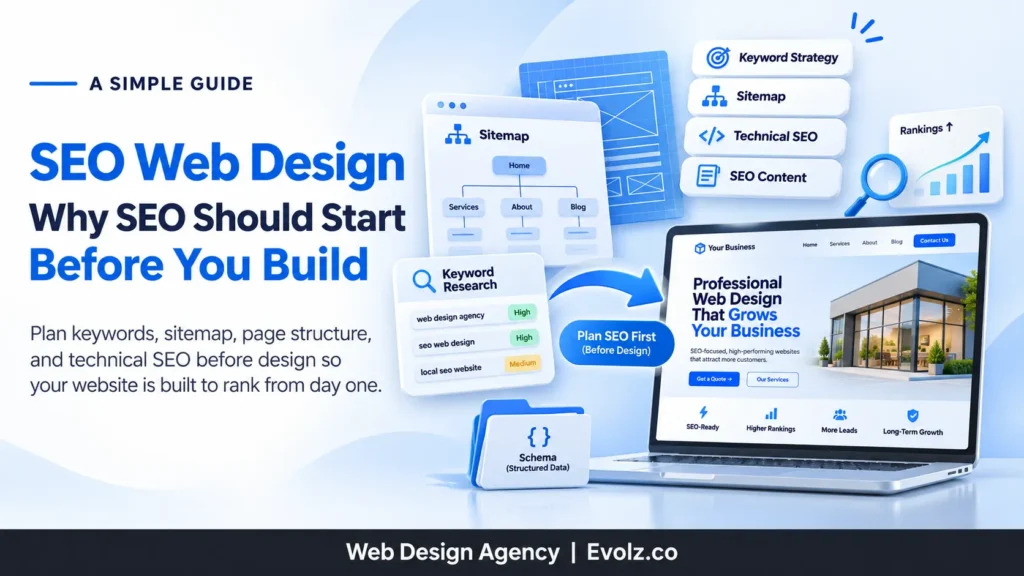
Short answer: SEO web design means planning your website around how people search before a single page is designed. The keywords, the pages, the URL structure and the technical setup all get decided first, and the design is built around them. A normal website does it the other way around: design first, SEO later (if at all).
At Evolz Digital, SEO web design is simply how we build. Every website we deliver comes with the SEO foundation already in place: keyword strategy, sitemap, meta data, image SEO, local schema, an optimized llms.txt file, Google Search Console setup and SEO-focused content.
In this post, we’ll explain what SEO web design actually includes, why it’s so much harder to bolt SEO onto a finished site, how we plan keywords and pages, and what kind of results it produces, with real numbers from client projects.
What is SEO web design?
SEO web design is a website built from the start to be found on Google, and increasingly on AI search tools too. It’s not a plugin you install at the end or a checklist someone runs after launch. It shapes the site’s structure from day one.
Here’s how it compares to a regular website build:
| SEO web design | Normal web design | |
|---|---|---|
| Starting point | Keyword strategy and sitemap | Visual design and user experience |
| Page structure | Planned around what people actually search for | Planned around what looks and feels right |
| Technical SEO | Built in from the start | Added later, or not at all |
| Content | Written to target specific search terms | Written for style and brand voice |
| Best for | Businesses that want organic traffic and leads | Brands relying on paid ads or separate campaigns |
What’s included in every SEO website we deliver
- Keyword strategy built around what your customers search for
- A planned sitemap with dedicated pages for the searches that matter
- Meta titles and descriptions on every page
- Image SEO, including optimized file names and alt text
- Local business schema so search engines understand who you are and where you work (schema.org’s LocalBusiness type is the standard)
- An optimized llms.txt file to help AI tools understand your site (llmstxt.org explains the format)
- Google Search Console setup and indexing
- SEO-focused content on every key page
If you want the official baseline, Google’s own SEO Starter Guide covers a lot of these fundamentals.
Why SEO has to start before you build
Think of it like building a house. You can repaint the walls any time, but moving the plumbing after the walls are up means tearing things apart.
SEO works the same way. The most important SEO decisions are structural:
- Which pages exist. If people search for “water heater repair” and you only have one general “Services” page, you can’t rank for it no matter how good your meta description is.
- How pages are organized and linked. Your navigation and internal links tell Google which pages matter most.
- What the URLs look like. Changing URLs after launch means setting up redirects to avoid losing whatever rankings you’ve built.
- What the content says. Copy written purely for style often skips the exact words customers type into Google.
When these are decided first, the design simply gives them a good home. When they’re decided last, you’re stuck either compromising on SEO or reworking pages that were already designed and built.
That’s why our process always starts with keywords and a sitemap, approved by the client, before a wireframe or a single Figma frame is created.
How we plan keywords and pages before design starts
Step 1: Find the keywords
We start with seed keywords, the obvious terms for the business, like “plumber” or “roof repair.” Then:
- We type each seed keyword into Google and see what autocomplete suggests. These are real searches people are making.
- We check volume and competition in tools like Semrush and Google Keyword Planner.
- We search each keyword ourselves to see what kind of pages are actually ranking. If Google shows service pages for a search, we build a service page. If it shows guides, a blog post is the better fit.
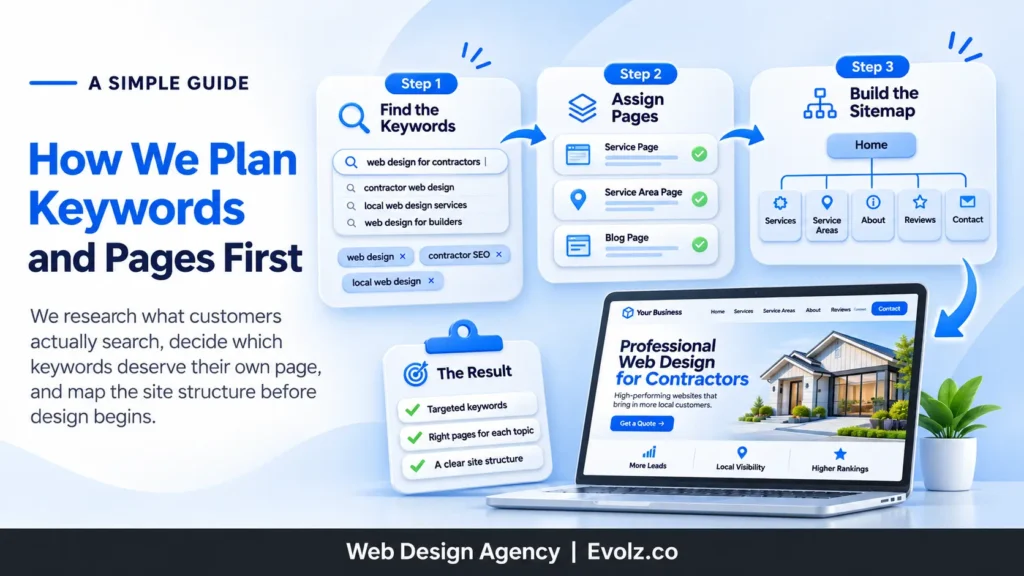
Step 2: Decide which keywords get their own page
Not every keyword deserves a page. We follow a few simple rules:
- Service pages: a keyword gets its own page only if it has enough search volume and the business genuinely offers that service in depth.
- Service area pages: we only create these for the major areas the business actually serves from its location, and only after checking there’s real search volume for them.
- Location pages: only if the business has an actual physical location. No location, no location page.
This keeps the site focused. Thin pages created just to chase keywords don’t help anyone, and they rarely rank.
Step 3: Map it all out in a sitemap
Everything goes into a Google Sheet: every page, the keyword it targets, and how it fits into the site structure. The client approves it before design begins.
As an illustration, a plumbing company’s sitemap might look something like this:
- Home
- Services
- Drain cleaning
- Water heater repair and installation
- Emergency plumbing
- Service areas
- One page per major town served, where search volume supports it
- About
- Reviews
- Contact
The exact pages always depend on the keyword research. Clear structure like this also makes website navigation easier for visitors, not just for Google.
SEO web design for online stores
Ecommerce SEO follows the same principle with a few extra pieces. When we build or rebuild a store, we:
- Keep Google Merchant Center listings intact so existing product listings aren’t disrupted
- Get the URL structure and technical setup right from the start
- Make sure the site is indexed properly, and that the merchant profile consistently pulls in products for Google’s free product listings
- Target different keywords on product pages and collection pages, so they support each other instead of competing
That last point is easy to miss. A collection page can target a broader search like “handmade jewellery,” while individual product pages target more specific ones. We build stores this way through our ecommerce web design service.
What SEO web design produces: real results
Abigail Bruce: from 12 calls a month to 100+, with no ads
Abigail Bruce is a life coach and hypnotherapist in San Francisco. Her old site on Weebly had organic traffic, but it wasn’t converting, and her Google Business Profile was generating only about 12 calls a month.
We rebuilt the site with SEO and conversion at the core, then followed up with ongoing local SEO. The results came in two phases:
| Before | After | |
|---|---|---|
| Phase 1: the rebuild | ||
| Bounce rate | About 95% | About 40% |
| Average time on site | About 1 minute | About 5 minutes |
| Conversion rate | About 2% | About 20% |
| Phase 2: six months of local SEO | ||
| Google Business Profile calls | About 12/month | 100+/month |
| Booking and direction clicks | 100+/month | 250+/month |
| Local Map Pack ranking | Not ranking | Top 3 |
No paid ads were used at any stage.
More results from SEO-first builds
- Pure Accounting Solutions (UK accounting firm): organic traffic grew 20% within two months of launch, and conversion rate went from about 1% to 5%.
- La Luz Lifestyle (jewellery brand): around 400 non-branded keywords started appearing in search after the redesign, with most low-competition terms reaching the top 3.
- Hennessy Lampworks (handmade lamps): went from invisible on Google to ranking for target keywords and receiving B2B partnership inquiries from organic search.
The pattern is consistent. Early improvements show up in engagement and conversions soon after launch, while rankings and organic leads build over the following months, especially with ongoing work behind them.
What’s included at launch, and what’s ongoing
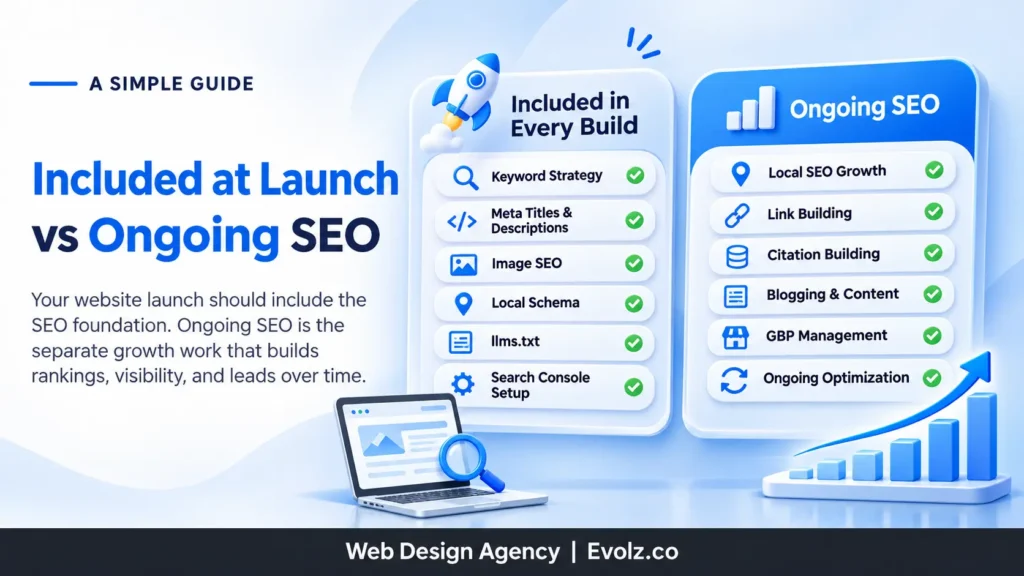
One thing that sets our approach apart: the SEO foundation isn’t an add-on. It’s included in every website package we build, at no extra cost. You don’t pay one price for a website and another to make it findable.
| Included in every build | Ongoing SEO (separate package) |
|---|---|
| Keyword strategy and sitemap | Local SEO growth |
| Meta titles and descriptions | Link building |
| Image SEO | Citation building |
| Local business schema | Blogging and content |
| Optimized llms.txt file | Google Business Profile management |
| Google Search Console setup and indexing | Ongoing optimization |
| SEO-focused page content |
The build gives you a site that’s ready to rank. Ongoing SEO is what pushes it up the rankings over time, especially in competitive local markets. That’s the work behind Abigail’s jump from 12 to 100+ calls a month. If you want to dig into the local side, we’ve written about using local SEO to attract more customers and improving your Google Business Profile, and our local SEO service handles it for you.
For build pricing, see our guide to how much a small business website costs in 2026.
When you might not need SEO web design
To be fair, not every website needs an SEO-first build. A design-led site can make sense if:
- You rely entirely on paid traffic. If every visitor comes from ads, organic rankings matter less than landing pages that convert.
- You’re an established brand running separate campaigns. Some brands already have demand and channels in place, and their site’s job is mainly to support those campaigns.
For most small businesses, though, organic search is one of the most cost-effective ways to get found. If there’s any chance you’ll want leads from Google, it’s far easier to plan for it now than to rebuild for it later.
FAQ
What is SEO web design? It’s a website planned around search from the start. Keywords, page structure, URLs and technical SEO are decided before design begins, so the finished site is ready to rank.
Can’t I just add SEO after my website is built? You can add some things, like meta descriptions. But the biggest SEO factors are structural, like which pages exist and how they’re organized. Changing those after launch often means redesigning pages and redirecting URLs.
Does SEO web design cost more? Not with us. The SEO foundation is included in every website package. Ongoing SEO, like link building and Google Business Profile management, is a separate package.
How long until an SEO website starts ranking? Engagement and conversions often improve soon after launch. Rankings and organic leads usually build over the following months. Pure Accounting Solutions saw 20% organic growth within two months, and Abigail Bruce reached the local top 3 within six months of ongoing local SEO.
Do I need a location page if I don’t have an office? No. We only create location pages for businesses with a real physical location. Service area pages can cover the towns you serve instead.
Does SEO web design help with AI search? Yes. Clear structure, specific content and an optimized llms.txt file all help AI tools like ChatGPT understand what your business does and who it serves.
Get a complimentary SEO audit
Whether you’re planning a new website or wondering why your current one isn’t showing up on Google, we’ll take a look. We’ll review your site structure, the keywords you’re ranking for (and the ones you’re missing), your technical SEO, schema, indexing and local search setup.
Then we’ll tell you exactly what’s holding you back and what to fix first, so your next website, or your current one, is built to be found.
Request your complimentary SEO audit and see where your site stands. Or learn more about our SEO web design service.