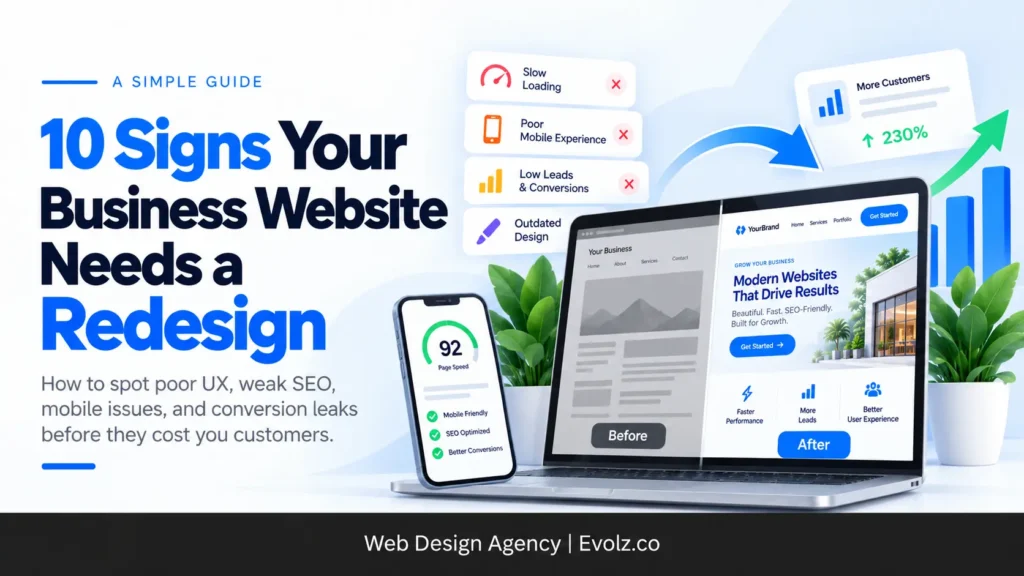
Short answer: your website needs a redesign when it stops producing business results, not when it hits a certain age. If it gets traffic but no leads, doesn’t show up on Google, looks off on mobile, or makes your business look smaller than it is, it’s costing you customers right now.
About half of the 100+ websites we’ve built at Evolz Digital were redesigns of existing sites. We’ve rebuilt sites that were 20 years old and sites that were barely a year old. When owners first reach out, they usually say one of the same few things: “I don’t like how it looks,” “we’re not getting traffic,” “people visit but don’t contact us,” or “we’ve outgrown this platform.”
Below are the 10 signs we see most often, how to check for each one on your own site, and real examples from client projects. We’ll also be honest about when you don’t need a full redesign, because sometimes a few targeted fixes do the job for a fraction of the cost.
The 10 signs at a glance
Use this as a quick self-check. If three or more apply to your site, keep reading.
| Sign | How to check it yourself | Usually needs |
|---|---|---|
| 1. Traffic but no leads | Conversion rate below about 2%, or bounce rate above 50% in GA4 | Fixes or a redesign |
| 2. You’re invisible on Google | Little or no organic traffic in Google Search Console | Fixes or a redesign |
| 3. It doesn’t look like a premium brand | Ask a customer if it matches the quality of your work | Redesign |
| 4. It’s broken on mobile | Open it on your phone and try every menu, form and button | Fixes or a redesign |
| 5. Too many steps to buy or contact you | Count the clicks from landing to purchase or inquiry | Fixes |
| 6. It’s slow and bloated | Load it on your phone over mobile data and count the plugins | Fixes or a redesign |
| 7. Your copy talks to everyone | Read your hero section and ask “who exactly is this for?” | Fixes |
| 8. You can’t track what’s working | Check if GA4, Search Console and your ad pixels are set up | Fixes |
| 9. AI search can’t understand you | Check for an llms.txt file and specific, expert content | Fixes |
| 10. You’ve outgrown your platform | Ask if your platform limits what your business needs next | Redesign |
Signs 1 to 5: your website isn’t turning visitors into customers
1. You get traffic, but it doesn’t turn into leads or sales
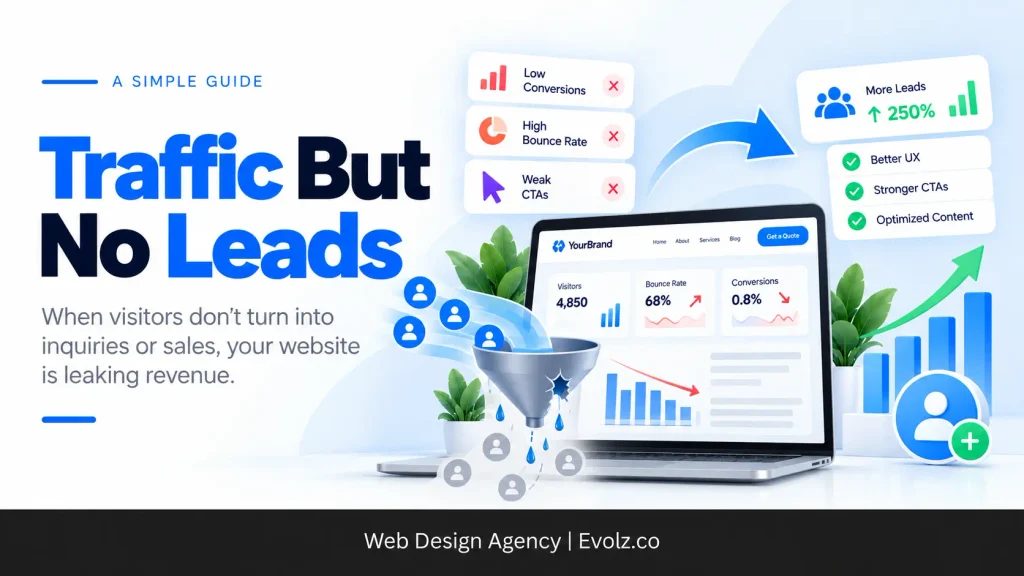
This is the most expensive sign on the list, because you’re already paying for the traffic through SEO, ads or word of mouth and then losing it at the last step.
Here’s a rough benchmark we use. For most industries, a conversion rate between 2% and 5% is healthy, and we’ve pushed some sites to around 10%. A bounce rate under 50% is a good sign, though it runs higher if most of your visitors come from cold traffic like social ads.
Pediatrics Board Review had steady traffic and almost nothing to show for it. Bounce rate sat around 95% and purchases were handled manually after people filled out a form. After the rebuild, bounce rate dropped to about 50% and conversion rate climbed from about 2% to 5%.
If this sounds familiar, our conversion rate optimization service is built for exactly this problem.
2. Nobody finds you on Google
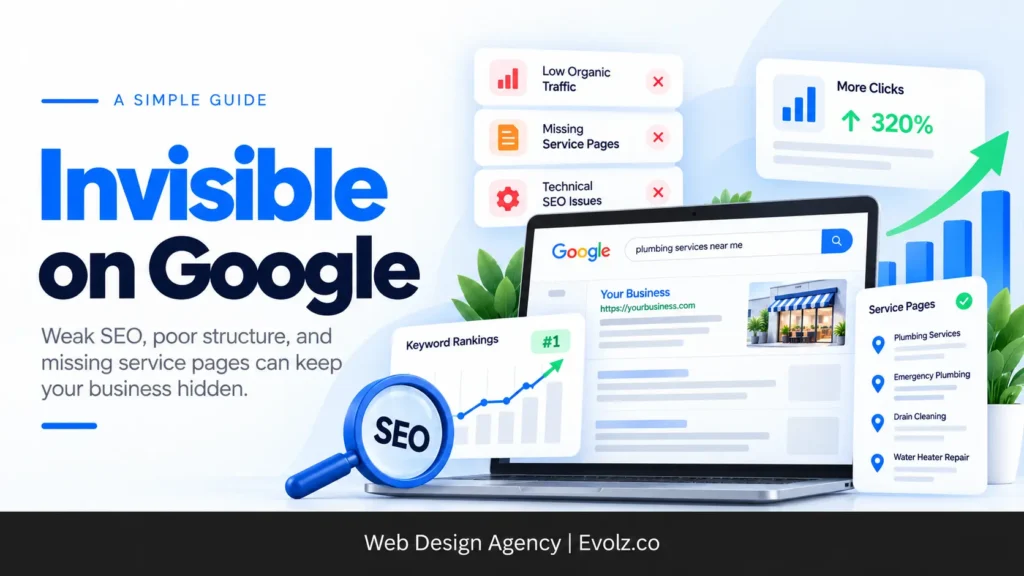
A lot of the sites we audit are basically online brochures. One homepage, an About page, a contact form, and that’s it. No dedicated service pages, no location pages, no keyword strategy, and broken technical SEO underneath.
That was the story with Pure Accounting Solutions, a UK accounting firm. We rebuilt the site around proper service pages and local keywords, then set up Google Search Console, GA4 and tracking. The result: conversion rate went from about 1% to 5%, bounce rate fell from about 80% to 50%, and organic traffic grew 20% in two months.
SEO works best when it’s planned before a single page is designed. That’s the whole idea behind SEO web design. For local businesses, pair it with a strong local SEO strategy and an optimized Google Business Profile.
3. It doesn’t make you look like a premium brand
“I just don’t like how it looks” is one of the most common things owners tell us. Usually there’s a real business reason behind that feeling: the site looks like it was built by someone who wasn’t a professional (or by the owner on a weekend), and it makes the business look smaller than it is.
La Luz Lifestyle, a Dutch jewellery brand, is a good example. The owner had built the store herself on Wix. The products were beautiful, but the site didn’t give buyers that premium feeling. We redesigned everything from scratch in Figma and rebuilt it on Wix. After launch, sales rose by up to 40% and around 400 non-branded keywords started showing up in search, with organic clicks roughly tripling from about 50 to 150.
Not sure what “premium” should look like for your industry? Our guide on choosing the right website design for your business is a good starting point.
4. It’s broken on mobile
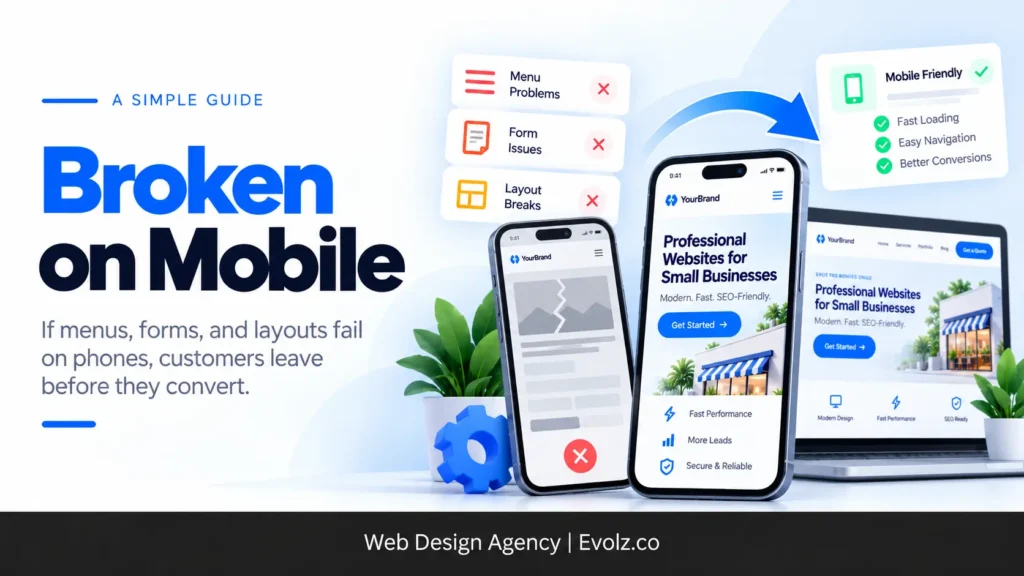
Most owners check their site on a desktop. Most of their customers don’t. When we audit sites on a phone, we regularly find hero sections that fall apart, menus that won’t open and text running off the screen.
La Luz had all of it. The off-canvas mobile menu didn’t work properly, margins were off, the grid was a mess, and page widths jumped between 1366px on some pages and 1080px on others. Small details like that add up to a site that feels unreliable, and nobody hands over their card details to a site that feels unreliable.
The test is simple: open your site on your phone and try to do everything a customer would. If you’re on WordPress, here’s how to create a mobile-friendly WordPress website.
5. It takes too many steps to buy or contact you
Every extra click is a chance for someone to leave. On La Luz’s old site, a buyer had to add a product to the cart, land on the cart page, complete the cart, reach checkout, fill in their personal details on one step and then pay on another. That’s five steps for one purchase.
Service businesses have their own version of this: a contact page buried in the footer, a 15-field form, or no clear call to action on service pages. Ferro FPF, a steel pipe supplier in Dubai, had no obvious way for visitors to request an estimate until we made “book an estimate” a clear action on every page.
Count the clicks it takes to buy from you or contact you. If it’s more than two or three, there’s money on the table. Clear website navigation helps a lot here too.
Signs 6 to 10: the problems you can’t see from the front end
6. It’s slow, bloated and painful to update
We don’t believe in obsessing over one speed score. Tools like PageSpeed Insights and GTmetrix are useful, but the real test is how the site feels when you open it on your phone or laptop. If it drags, your visitors feel it too.
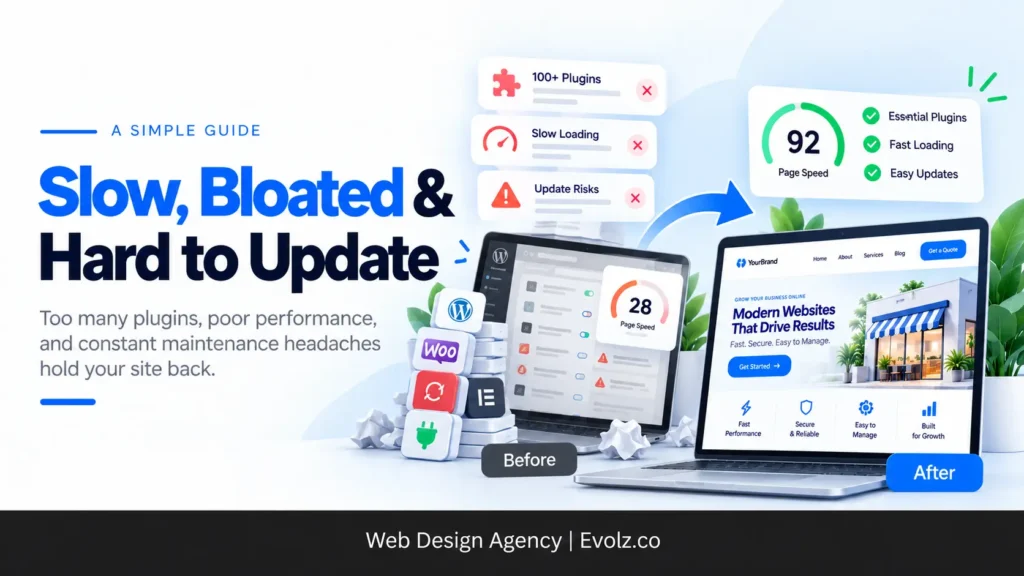
The most extreme case we’ve seen was Pediatrics Board Review. The site ran on Thrive Themes with more than 100 active plugins. It was slow, hard to maintain and every update felt risky. We rebuilt it on the Kadence theme and cut the plugin count down to around 20 to 25 essentials.
If you’re dreading every small change to your site, that’s a sign too. Here’s more on how to improve website speed and performance and how to choose the best WordPress theme so you don’t end up in the same spot.
7. Your copy talks to everyone (so it connects with no one)
This is the sign owners almost never notice. The site says things like “quality service you can trust” and “solutions for all your needs.” It could belong to any business in any city.
Good website copy is written for a specific customer. It names their problem, speaks their language and makes it obvious within seconds that they’re in the right place. If your hero section could be copied onto a competitor’s site without anyone noticing, it isn’t doing its job. Using real customer data is one of the best ways to sharpen it.
8. You have no idea what’s working
When we audit a site, one of the first things we check is whether GA4, Google Search Console and ad pixels are set up correctly. A surprising number aren’t set up at all, or they’re tracking the wrong things.
Without tracking, you can’t tell which pages bring in leads, where visitors drop off, or whether your ad spend is paying for itself. Every decision becomes a guess. For Pure Accounting Solutions, setting up proper tracking was part of the rebuild, and it’s the reason we can measure results like the jump from 1% to 5% conversion.
9. AI search can’t understand your website
This one is new for 2026. People now ask ChatGPT, Perplexity and Google’s AI Overviews for recommendations, and those tools need clear information to work with.
Almost every site we’ve rebuilt recently had no llms.txt file, the file that helps AI crawlers understand what a website is about. We add one as standard now. But the bigger issue is content. AI tools still rely on websites for their information, and generic content is everywhere. The sites that get recommended are the ones with authentic, expert content that clearly speaks to one type of customer.
A local plumber should clearly say who they serve and where. An ecommerce store should define its niche audience and speak to them only. If your site tries to talk to everyone, AI has no reason to recommend it to anyone. A solid SEO foundation covers a lot of this.
10. You’ve outgrown your platform
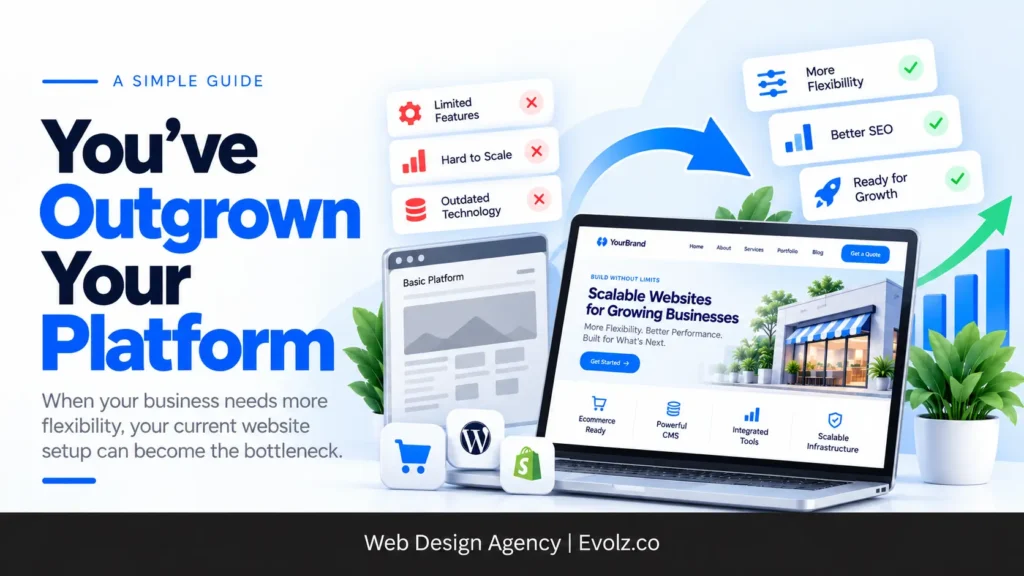
Sometimes the design is fine but the platform isn’t. We see this most with ecommerce stores moving from WooCommerce to Shopify. We also see the reverse of what you might expect: some owners move from WordPress to Squarespace because they want to make simple edits themselves.
Hennessy Lampworks, a handmade lamp maker in San Francisco, had a good-looking Squarespace site that couldn’t sell anything and barely showed up on Google. We moved them to Shopify, and they now rank for target keywords, sell online and get B2B inquiries from search.
That said, a redesign doesn’t always mean switching platforms. La Luz stayed on Wix and still saw a big jump in sales. The right platform depends on where your business is heading. Our guide on choosing the best CMS platform walks through the options, and we build on WordPress, Shopify, Wix and Squarespace.
Fix it or rebuild it? How we decide
Not every website with problems needs a full redesign. We’ve told plenty of prospects they don’t, and here’s the simple rule we use:
- If the structure is solid, and the problems are technical SEO issues or a few conversion leaks, we fix them. No need to start over.
- If the structure and the design are both off, we rebuild. Patching a site with a broken foundation usually costs more in the long run than doing it properly once.
| Option | When it makes sense | What it costs with us |
|---|---|---|
| Targeted fixes | Good structure, but technical SEO issues, tracking gaps or a few conversion problems | $35/hr, with the hours quoted upfront |
| Full redesign | Poor structure and poor design, wrong platform, or a site that no longer fits the business | From $1,000 (more below) |
With fixes, we always quote the number of hours before any work starts, so you can decide whether to go ahead or take another route. Sometimes these fixes are part of ongoing marketing work too, since there’s no point sending ad traffic to a page that leaks leads.
How often should you redesign your website?
There’s no magic number. You’ll see advice saying every two or three years, but we’ve worked on websites that were built 20 years ago, and we’ve rebuilt sites that were only a year or two old.
The age of the site isn’t what matters. Results are. And the decision shouldn’t come down to how you feel about the site on a given day either.
Our advice: once you have a decent, well-built website, give it time to work. Watch your traffic, leads and sales. Consider a redesign only when the results aren’t coming, or when your business has grown to the point where you need a better platform or a better site structure.
What a redesign costs and how we do it
A redesign costs more than a new build of the same size. That surprises some people, but there’s a lot more involved: migrating and improving existing content, mapping every old URL, making the design feel premium, and making sure you don’t lose the Google rankings you’ve already earned.
| Redesign size | Price |
|---|---|
| Smaller sites | From $1,000 |
| Mid-size sites | Around $1,500 to $1,750 |
| Larger sites | Up to $2,500 |
| Very large sites | Custom quote, discussed before we start |
For comparison, our new-build packages start at $100. If you’re weighing up the full picture, we break down every cost in our guide to how much a small business website costs in 2026.
Our redesign process
- Keywords and sitemap. We plan the keywords and page structure in a Google Sheet and get your approval first.
- Wireframe. A rough layout of how the site will be organized.
- Figma design. The full visual design, with revision rounds until you’re happy.
- Development. We build the approved design.
- SEO fixes and audit. We fix any SEO issues and audit the finished site.
- Launch prep. We map every old URL to its new one, set up schema markup, connect integrations and migrate improved content from the old site.
- Deploy. The new site goes live.
Every step has revision rounds so there are no surprises at launch.
Will a redesign hurt my Google rankings?
Done properly, it shouldn’t. We haven’t had a client lose traffic after a redesign relaunch. The one time traffic dipped, it wasn’t really a redesign. It was a full rebrand where the domain changed too, which meant building authority on a new domain from scratch. We regained all of that traffic over the following few months.
The key is in step 6. Skipping URL mapping is one of the fastest ways to lose rankings you spent years building.
Before you hire anyone for a redesign
These are the mistakes we see most often heading into 2027:
- Not checking real results. Before you hire a designer or agency, look at the results they’ve produced for previous clients, not just screenshots. Did those sites get more traffic, leads or sales? Our case studies show what we mean.
- Redesigning for looks only. Design matters, but it isn’t everything. If the new site isn’t built for SEO and conversions, it doesn’t matter how good it looks. It still won’t grow your business.
- Ending up with a generic AI website. AI tools have made it easy to spin up a site in an afternoon, and the internet is filling up with sites that all look the same. If you use AI, put real effort into your prompts and make the site specific to your business and your customers. Generic gets ignored by people and by AI search alike.
If you’re still deciding whether you need a full website or just a focused page for your ads, our post on landing pages vs. home pages might help.
FAQ
How do I know if my website needs a redesign or just a few fixes? If the site structure is solid and the problems are technical SEO issues or a few conversion leaks, targeted fixes are usually enough. If both the structure and the design are poor, a redesign is the better investment.
How much does a website redesign cost? With us, redesigns start at $1,000, mid-size projects run around $1,500 to $1,750, and larger sites go up to $2,500. Very large sites get a custom quote. Targeted fixes are billed at $35/hr.
How often should a business redesign its website? There’s no set timeline. Redesign when your site stops producing results or your business outgrows it, not because a certain number of years have passed.
Will I lose my Google rankings if I redesign? Not if it’s done properly. Mapping old URLs to new ones, keeping schema markup in place and migrating content carefully protects the rankings you already have.
What’s a good conversion rate for a small business website? For most industries, 2% to 5% is healthy. Below that, there’s usually something on the site getting in the way.
Do I need to switch platforms to redesign my website? Not always. La Luz Lifestyle stayed on Wix and still saw sales rise by up to 40%. Switch only when your current platform genuinely limits what your business needs.
Not sure which signs apply to you? Get a free website audit
If you recognized your site in a few of these signs, you don’t have to guess what to do next. We’ll take a proper look under the hood: your site and page structure, headings, keyword strategy, technical SEO, mobile experience, conversion paths, tracking setup and whether AI crawlers can understand your site.
Then we’ll tell you honestly whether you need a full redesign or just a handful of fixes. Sometimes the answer is “don’t redesign,” and we’ll say so.
Request your free website audit and we’ll get back to you with what’s holding your site back and what to fix first.